

Trade shows are important.
They allow us to meet partners, exchange ideas, and explore possibilities in a very short time. In a few days, many projects appear promising, timelines seem achievable, and solutions look straightforward.
But once the trade show ends and a project officially begins, reality takes over.
In marine interior projects, success is rarely determined by what is discussed at the booth. It is determined by how well products, materials, and supply chains are managed after the exhibition.
From products to systems, not individual items
One of the most common challenges in marine interior projects is treating products as isolated items.
In reality, interior outfitting is a system, not a list of components.
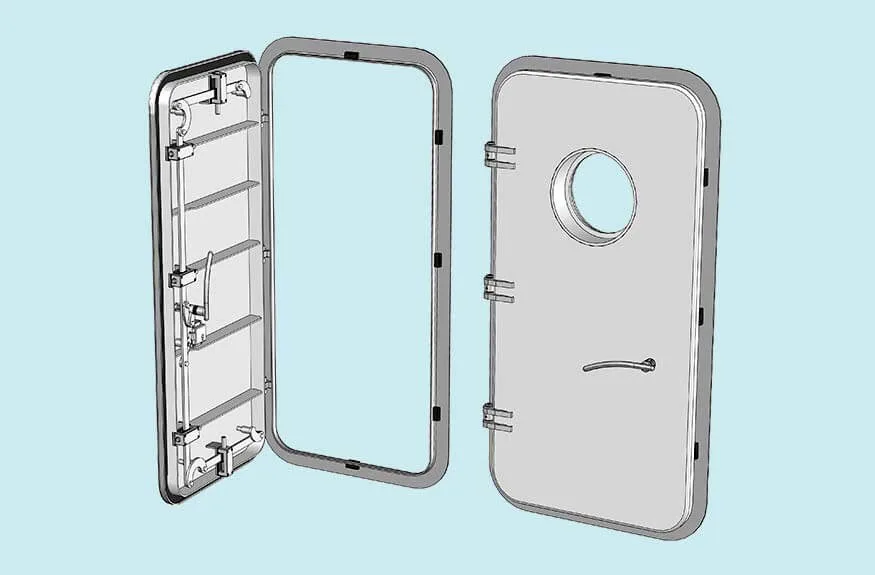
A door is not just a door.
It interacts with the wall thickness, insulation type, fire rating, hardware, and installation sequence.
A panel is not just a panel.
It affects weight control, certification, interface with furniture, and long-term maintenance.
A good interior solution starts by understanding how each product fits into the overall system, rather than optimizing individual items in isolation.
Product selection: compliance first, cost second
In marine projects, products must work under specific conditions: vibration, humidity, fire safety, long operational cycles, and strict inspection requirements.
This means:
- A product suitable for land-based use may not be suitable for marine application
- Similar-looking materials may carry completely different certification scopes
- Small differences in specification can create major approval issues later
Selecting the “right” product is not about finding the cheapest option, but about choosing materials that are fit for purpose, compliant, and reliable throughout the vessel’s lifecycle.
Cost optimization only makes sense after suitability and compliance are confirmed.
Material packaging: reducing interfaces, not just suppliers
For interior turnkey or semi-turnkey projects, one of the biggest risks lies in fragmented sourcing.
Multiple suppliers often mean:
- Unclear responsibility boundaries
- Interface mismatches between materials
- Delays caused by re-coordination and re-approval
A well-structured material package focuses on reducing interfaces, not just reducing prices.
By grouping compatible materials together and managing them as a package, it becomes possible to:
- Align technical standards across products
- Simplify approval processes
- Reduce on-site conflicts during installation
- Improve overall schedule control
This approach requires a deep understanding of both products and installation logic, not just procurement.
Supply chain planning: timing is as important as sourcing
In marine interior projects, early procurement does not always mean early delivery.
Materials delivered too early may face:
- Storage damage
- Misplacement or loss
- Re-handling costs
Materials delivered too late may disrupt:
- Installation sequences
- Workforce planning
- Overall project milestones
Effective supply chain management means delivering the right materials at the right stage, aligned with installation readiness and site conditions.
This requires continuous coordination between design, procurement, manufacturing, logistics, and on-site teams.
Why we prefer to slow down after the trade show
After exhibitions, there is often pressure to move fast.
However, experience has shown that slowing down at the beginning saves time later.
By taking additional time to:
- Verify drawings and interfaces
- Confirm material specifications and certifications
- Align supply chain schedules with installation plans
We reduce the likelihood of rework, delays, and unexpected costs during execution.
In marine projects, mistakes are rarely small.
They tend to surface late and are expensive to correct.
A long-term view of marine interior work
Trade shows open doors.
Projects demand responsibility.
Delivering a successful marine interior project is not about how quickly an agreement is made, but about how carefully decisions are executed afterward.
Choosing to move slower at the beginning is not hesitation.
It is a deliberate commitment to quality, compliance, and long-term performance.
Trade shows last a few days.
Marine projects last for years.
And that difference defines how we work.
🔗 Learn more about our marine interior solutions
www.july-marine.com
www.julymarinegroup.com