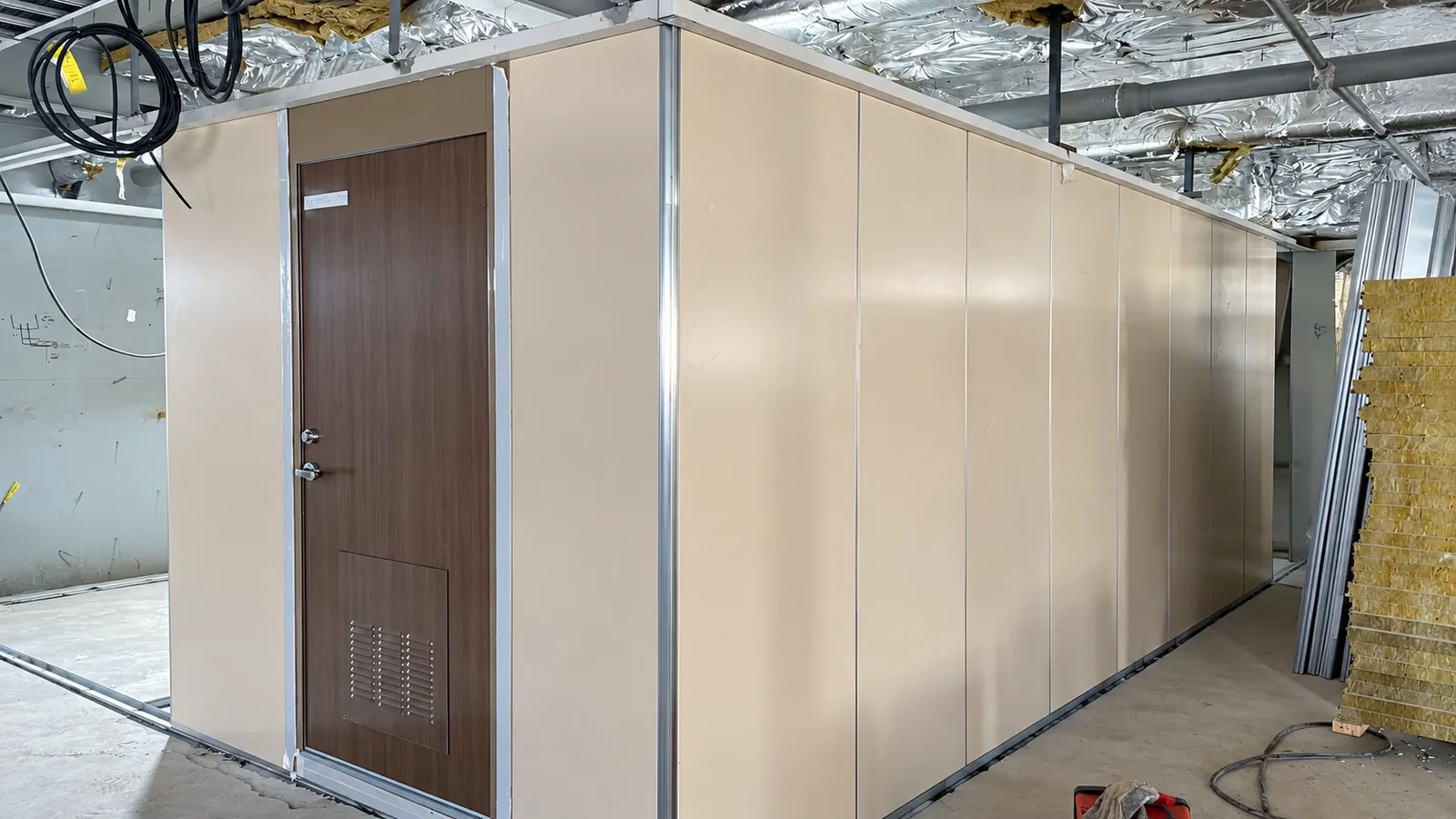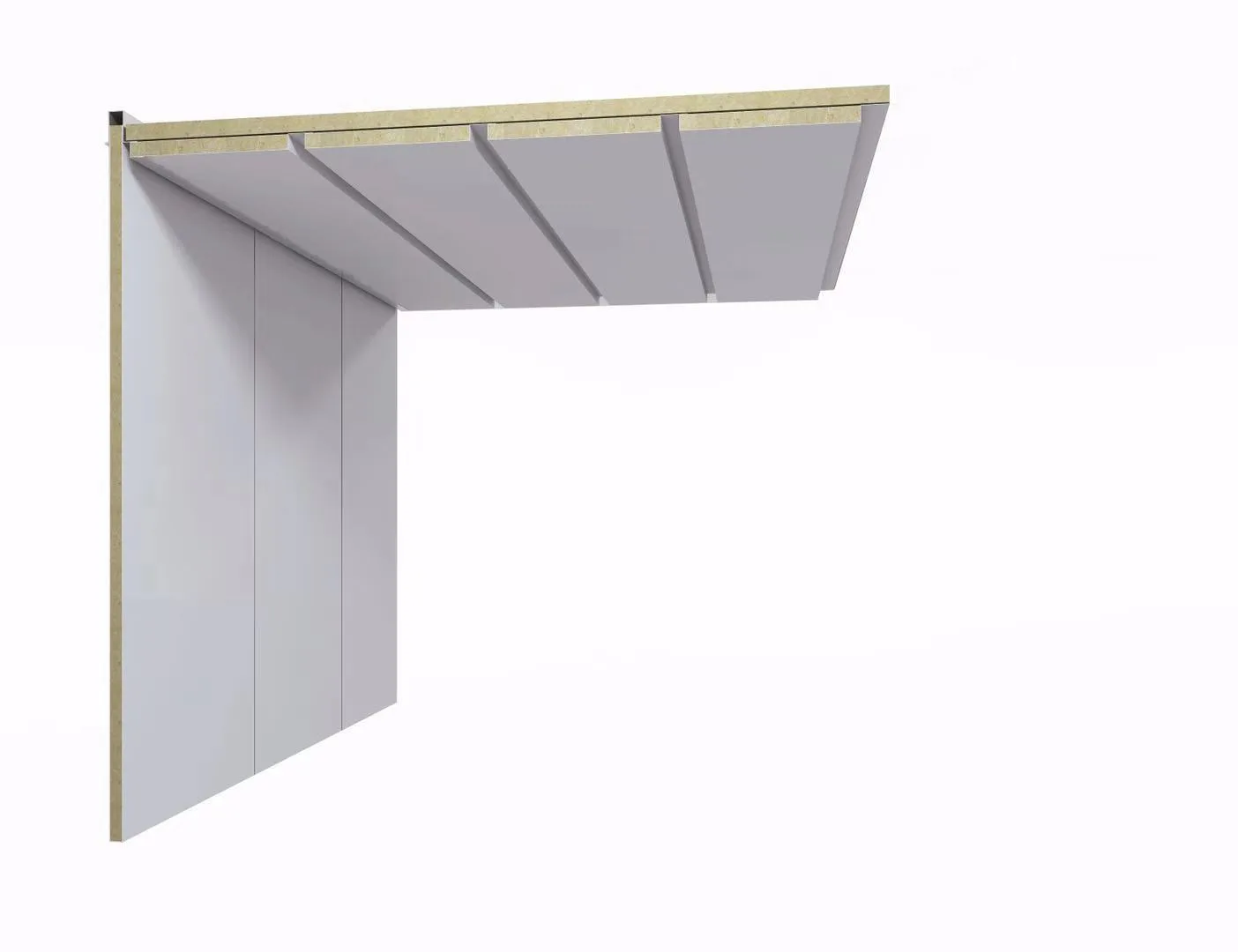

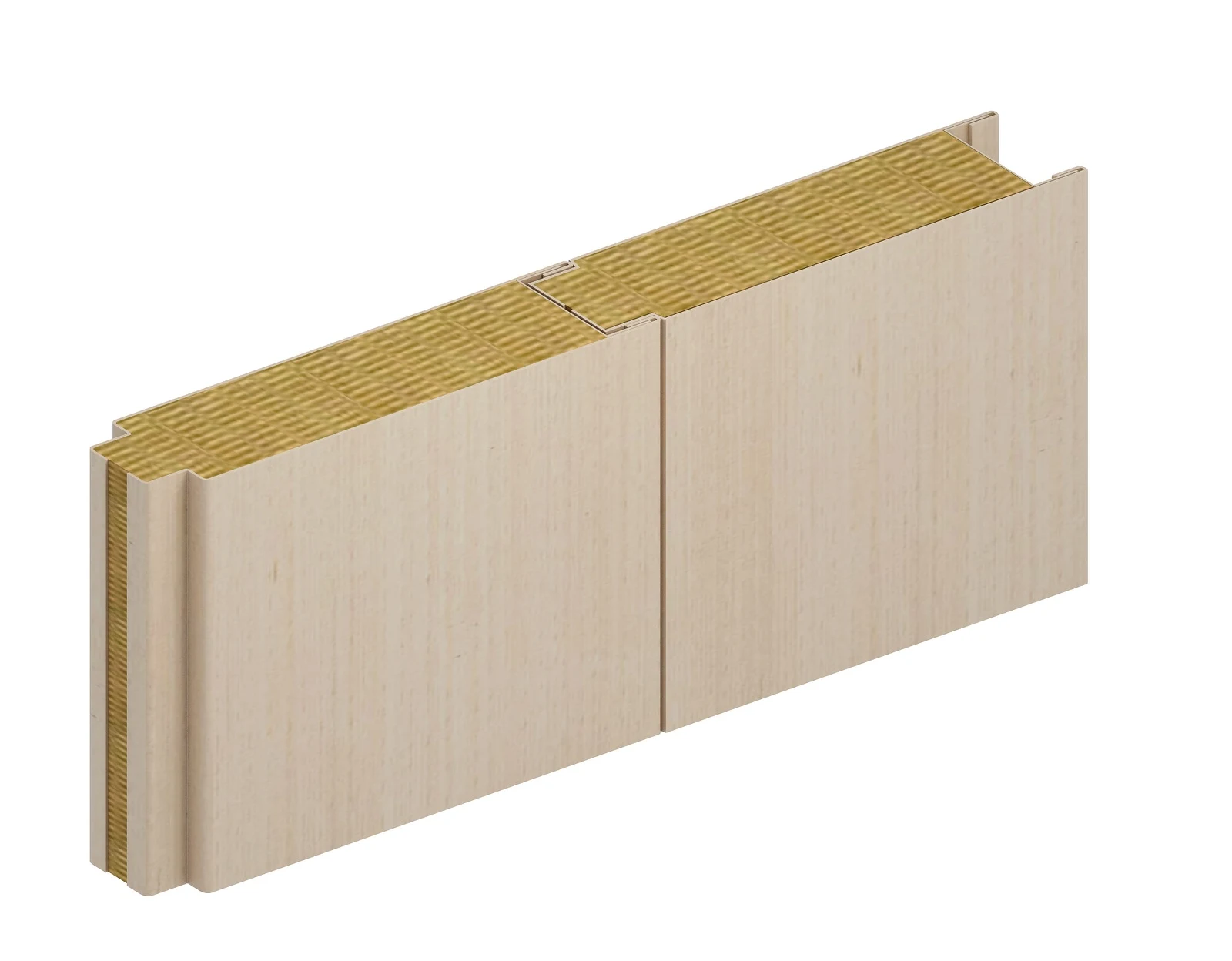
The figures 120 kg/m³ and 150 kg/m³ describe the density of the rock wool core. They do not describe the weight of the finished panel per square metre, and they do not identify a complete wall-panel system by themselves.
JULY Marine can provide marine panel systems using a rock wool core density of 120 kg/m³ or 150 kg/m³, depending on the selected panel system. Before requesting a quotation or approving a technical submittal, connect the density to the exact panel construction, model reference and supporting documents.
First check the unit: kg/m³ is not kg/m²
Density is expressed as mass per unit volume. For a rock wool core, the correct unit is kilograms per cubic metre: kg/m³.
Panel weight is different. It may be expressed as kilograms per square metre: kg/m². Finished-panel weight is affected by more than the core density, including:
- Core thickness and overall panel thickness.
- Steel, aluminium or other facing materials.
- Sheet thickness and surface finish.
- Joint, edge and reinforcement construction.
- Any additional layers or components included in the tested assembly.
For this reason, a statement such as “120 kg/m² rock wool density” mixes two different measurements. Likewise, it is not reliable to calculate the finished-panel weight from the core density alone.
Does a higher density automatically mean a better panel?
Not by itself. A higher numerical density does not automatically confirm that a panel has a better fire classification, higher sound reduction, greater strength or suitability for a particular vessel area.
Performance belongs to the complete selected system and the conditions under which it was assessed. Buyers should review the panel construction and applicable supporting documents rather than treating core density as a standalone performance grade.
The most useful question is therefore not simply “Is 150 kg/m³ better than 120 kg/m³?” It is:
Which panel system matches the required location, construction, documentation and project interfaces?
Information to match with the selected panel system
1. Product and system reference
Record the manufacturer, product name and exact model or system reference. Similar panel names do not prove that the construction or approval scope is identical.
2. Intended application
State whether the panel is required for a cabin partition, corridor, lining, wet-area interface, ceiling or another location. Identify the deck and room references where available.
3. Core density and thickness
List density in kg/m³ and thickness in millimetres. Do not copy one system’s density into another product schedule without checking the offered construction.
4. Facing and finish
Specify the facing material, sheet thickness where required, exposed finish, colour or finish reference, and which faces will be visible.
5. Required performance and approval basis
State the required project classification or performance separately. Fire, acoustic and other performance must be checked against the actual system and the applicable document. Density alone is not evidence of compliance.
6. Dimensions and quantities
Provide panel height, width or modular basis, overall thickness, quantities and any restrictions caused by access, packing or installation sequence.
7. Joints, profiles and openings
Include the required joint arrangement, corner and perimeter profiles, trims, door or window openings, service penetrations and other interface details.
Keep certificates tied to the exact configuration
The IMO 2010 Fire Test Procedures Code describes approval around an identified product, its specific qualities, construction information and supporting test report. It also states that a significant alteration can affect the validity of an approval.
In practical procurement terms, do not assume that one certificate covers every density, thickness, facing, joint or product variant. For the offered system, check:
- Product and model designation.
- Manufacturer named in the document.
- Construction, materials and thickness covered.
- Classification or performance stated.
- Limitations, conditions and installation references.
- Certificate validity and the document required by the project.
This review should be completed against the actual product documents and the project’s approval process. A general brochure or a certificate for another configuration is not a substitute.
RFQ checklist for a marine rock wool panel package
Send the following information with the enquiry:
- Vessel type, newbuild or refit, project location and delivery destination.
- Panel schedule with deck, room and application references.
- Required product or system type, if already specified.
- Core density and thickness, clearly labelled with units.
- Facing material, finish and colour requirements.
- Required fire, acoustic or other project criteria.
- Required certificates, drawings, datasheets and test reports.
- Panel dimensions, quantities, openings, profiles and accessories.
- Packing, identification and delivery-sequence requirements.
- Items still open for technical confirmation.
Mark unknown items as “to be confirmed” rather than filling the schedule with an assumed value. The quotation can then identify the offered system and any information needed before order release.
Frequently Asked Questions
Is 120 kg/m³ the weight of a marine wall panel?
No. It is the density of the rock wool core. Finished-panel weight is normally stated separately and depends on the complete construction.
Can JULY Marine provide both 120 and 150 kg/m³ rock wool configurations?
Yes. JULY Marine can provide 120 kg/m³ or 150 kg/m³ rock wool core configurations, depending on the selected panel system. The exact construction and documentation must be confirmed for the offered system.
Does 150 kg/m³ automatically provide a higher fire rating?
No. Fire classification applies to the tested or approved assembly and its documented construction. Core density alone does not establish the fire rating.
Can the same certificate be used for different panel types?
Do not assume so. Check the product designation, construction, thickness, materials, scope and conditions shown in the applicable document.
What should be sent for a quotation?
Send the panel schedule, drawings, quantities, required construction, finish, openings, accessories, project criteria and document requirements. Clearly identify any item that still needs confirmation.
Request a project-specific panel quotation
Review JULY Marine’s marine wall panel range and marine insulation materials. Send your panel schedule, relevant drawings and required approval basis through the contact page.
JULY Marine will review the requested scope against the available product information. Final density, construction, dimensions, weight, performance and documents will be stated for the selected offer rather than assumed from a generic panel description.